Sidewalks of Joy: A Tour of Mini Museums (Part 1)

I didn’t expect this much joy. It was amazing to even get out of the house and ride a bike around Portland. With every turn of the wheel I saw things I hadn’t seen before. It was a gray, late morning in March near the end of winter. I should have been writing essays for a graduate school application, but it didn’t take much to get me out of the house to experience what’s been called by other media sources the Sidewalk of Joy Tour, a loose network of exhibits and offerings of different kinds that border Portland sidewalks. On this trip I was seeing businesses I didn’t know existed like Coffee Beer while encountering a giant spider and an assortment of giraffes I couldn’t document because my camera battery died. I’ve realized it’s always worth seeing Portland by bike. There’s magic to be discovered and a bit of procrastination didn’t end up being a bad thing.

PDX Minifigure Exchange

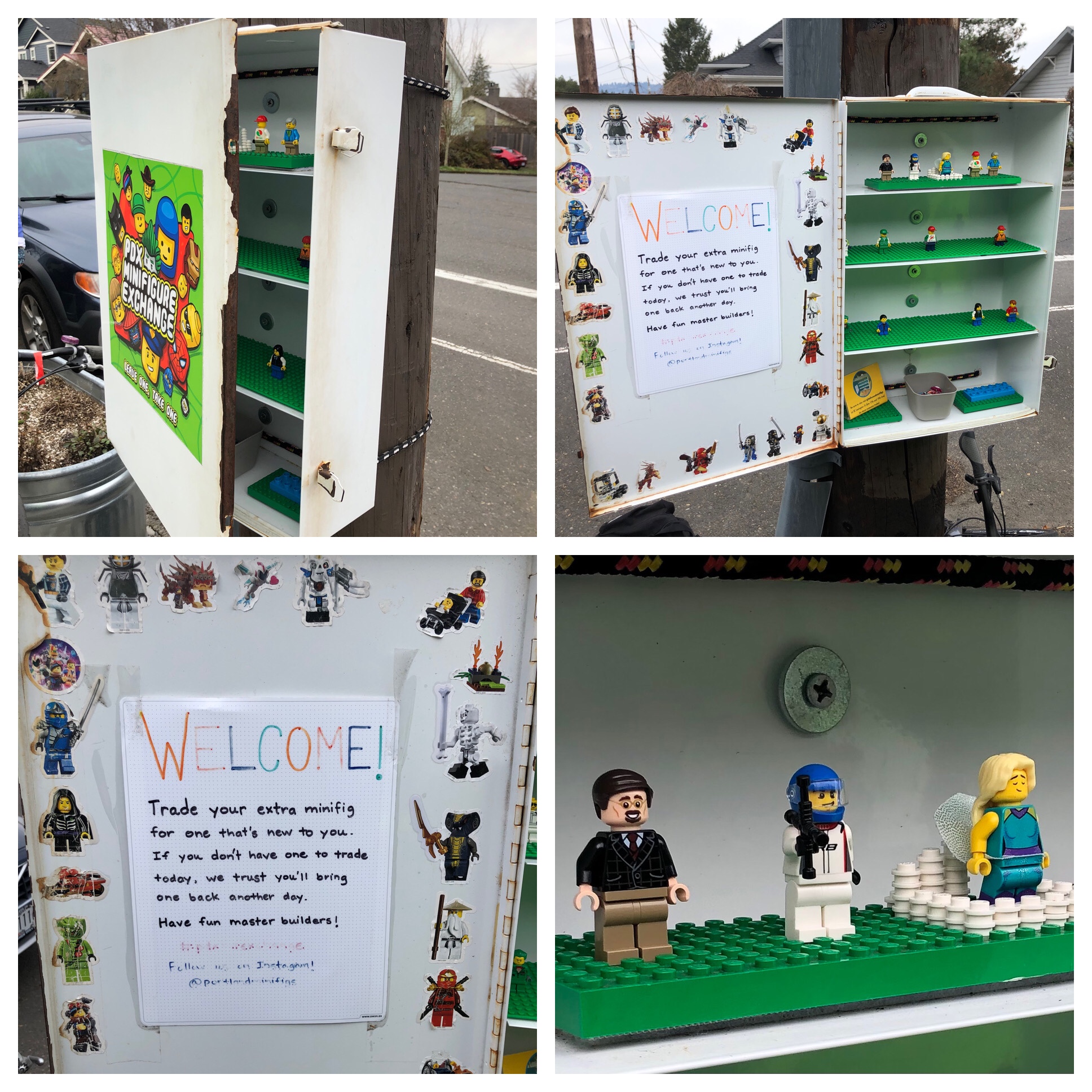
The Creston-Kenilworth neighborhood is home to the PDX Minifigure Exchange. I became more familiar with these figurines this year. Imagine an Aaron Rogers version, if you’re a sports fan. I’m also familiar with the movies made starring these Lego people. I didn’t have one to trade but the next best thing is seeing the many variations of these figurines. You can find them at the intersection of SE Cora Street and SE 42nd Avenue down the street from the infamous Coffee Beer establishment.
The Be Kind VHS Depot

There are still billions of VHS tapes lingering before they transition to the landfill. No one knows what to do with them. Learning the lessons from film preservationists, it makes sense to keep VHS tape alive by establishing neighbor repositories to house them and spread their entertainment value. Here’s hoping this catches on. While The Be Kind VHS Depot, located on SE 45th Street in the Creston-Kenilworth neighborhood, is your opportunity to view a copy of Free Willy, for free no less, there are plenty of other options. And yeah, as the name implies, please remember to rewind.***

Free Art Library
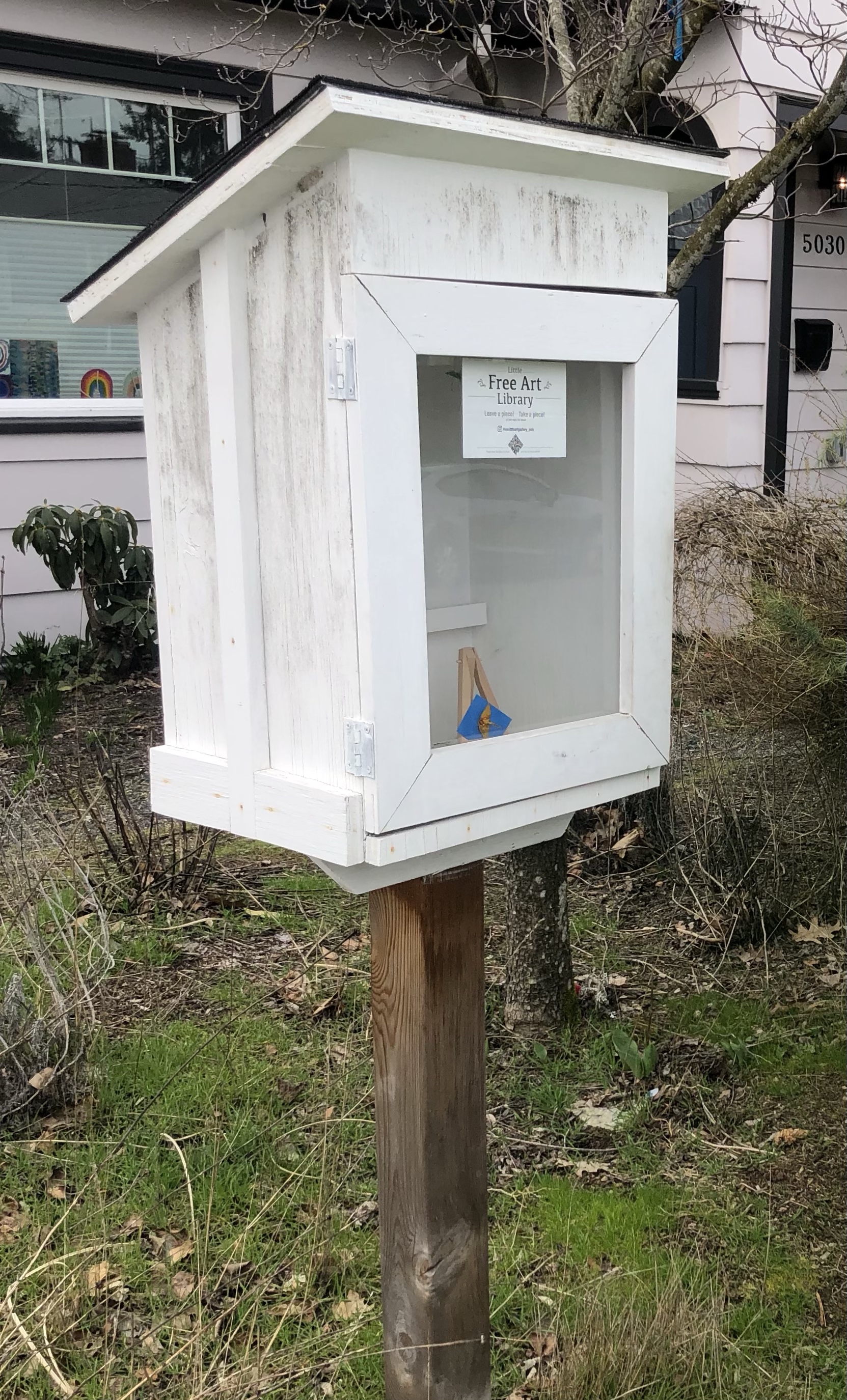
The small scale seals the deal. Large art won’t fit the box. This is another Sidewalk of Joy stop in the Creston-Kenilworth neighborhood, an area that’s proving itself to be a hotbed of mini museums. The tiny art can also be found on SE 45th Avenue. The offerings are as intricate as they are easy to take home. The offer is open to the public just don’t take the easels.

Comic Cottage

Inside this box you’ll find a trove of comic books. If you’re not intent on hoarding your own trade for different ones. Boxy, smart, colorful and complete with a Wonder Woman door knob, the cottage houses comics on SE Rhone Street in the Foster-Powell neighborhood a few steps from another sidewalk museum.

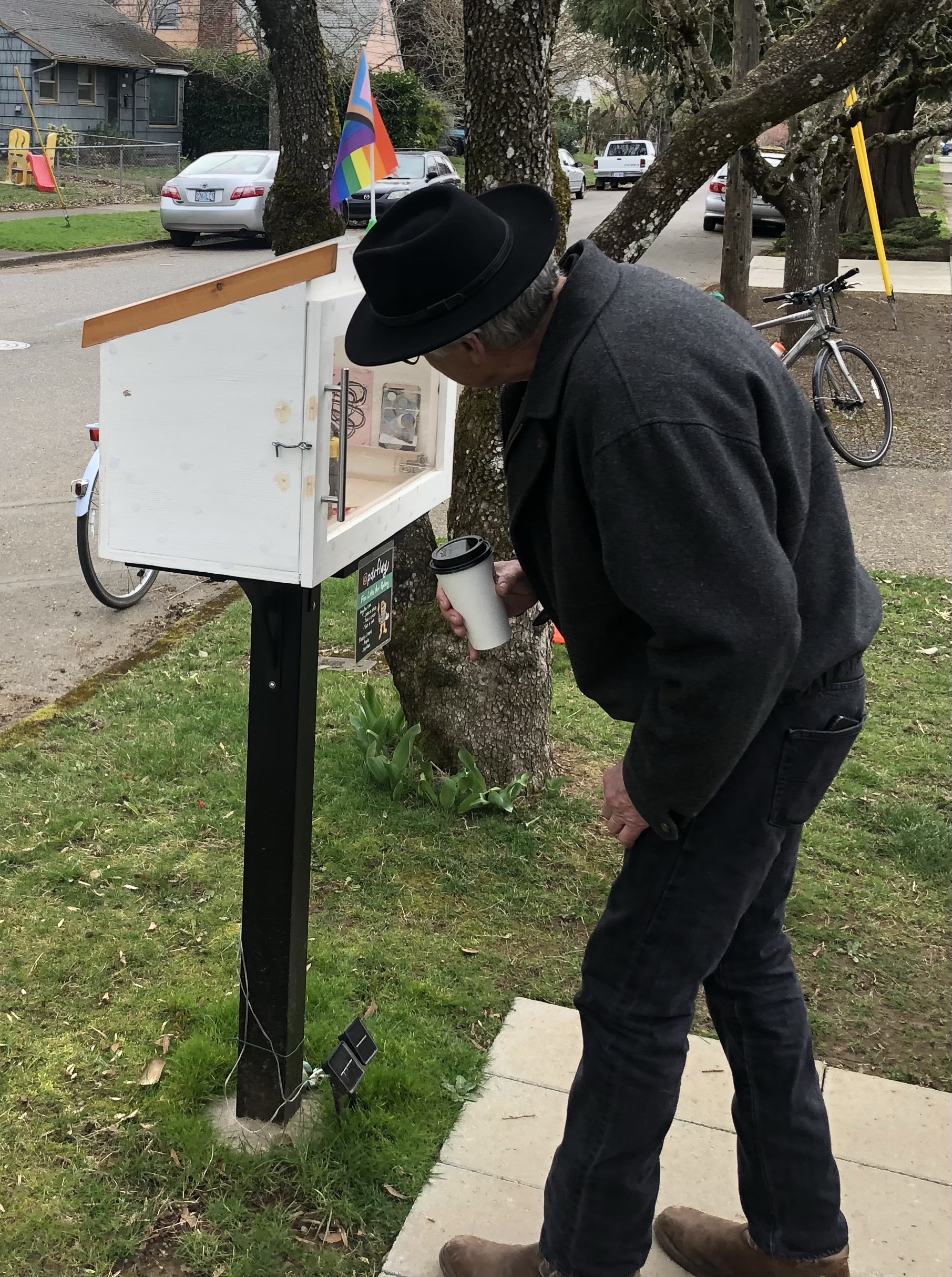
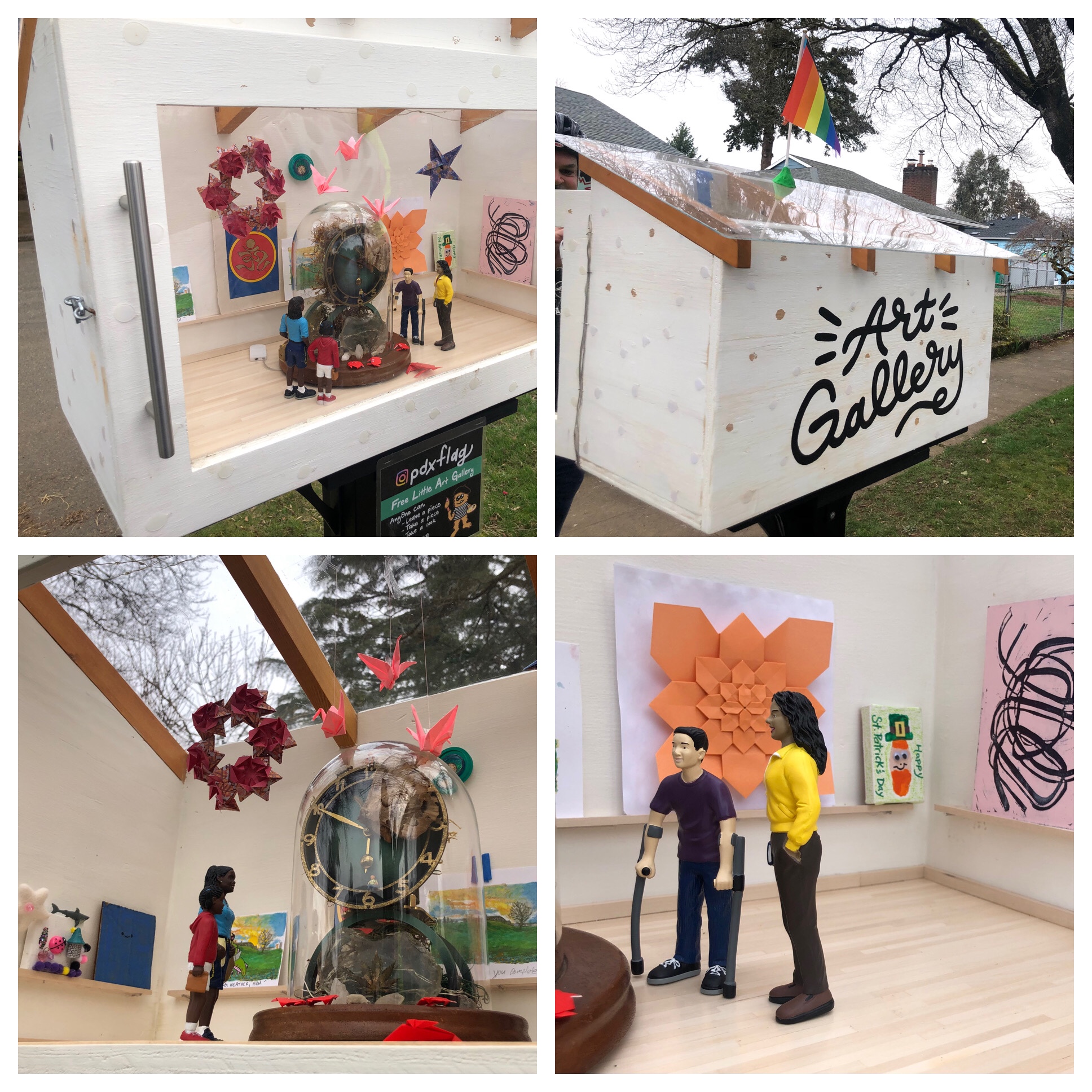
PDX Flag (Free Little Art Gallery)

Next door to the Comic Cottage and still within the borders of Foster-Powell, you’ll find the PDX Flag Free LIttle Art Gallery. It gets bonus points for looking like an actual art gallery, complete with patrons and miniature pieces of art that presents a multi-dimensional level of creativity. It’s fun to look at and the displays are continually updated. You can keep up by viewing their Instagram feed.
The Woodward Wishing Shrine

In the South Tabor neighborhood, The Woodward Wishing Shrine feels like a rustic altar. The colors pop against its drab surroundings. It borders Franklin High School on SE Woodward Street. I’m not familiar enough with Wiccan sensibilities to know if this shrine has any but it seems to lean that way. After spending time contemplating feathers, moss, twigs and the trinkets inside the shrine I forgot to make a wish.

Free Blockbuster.org
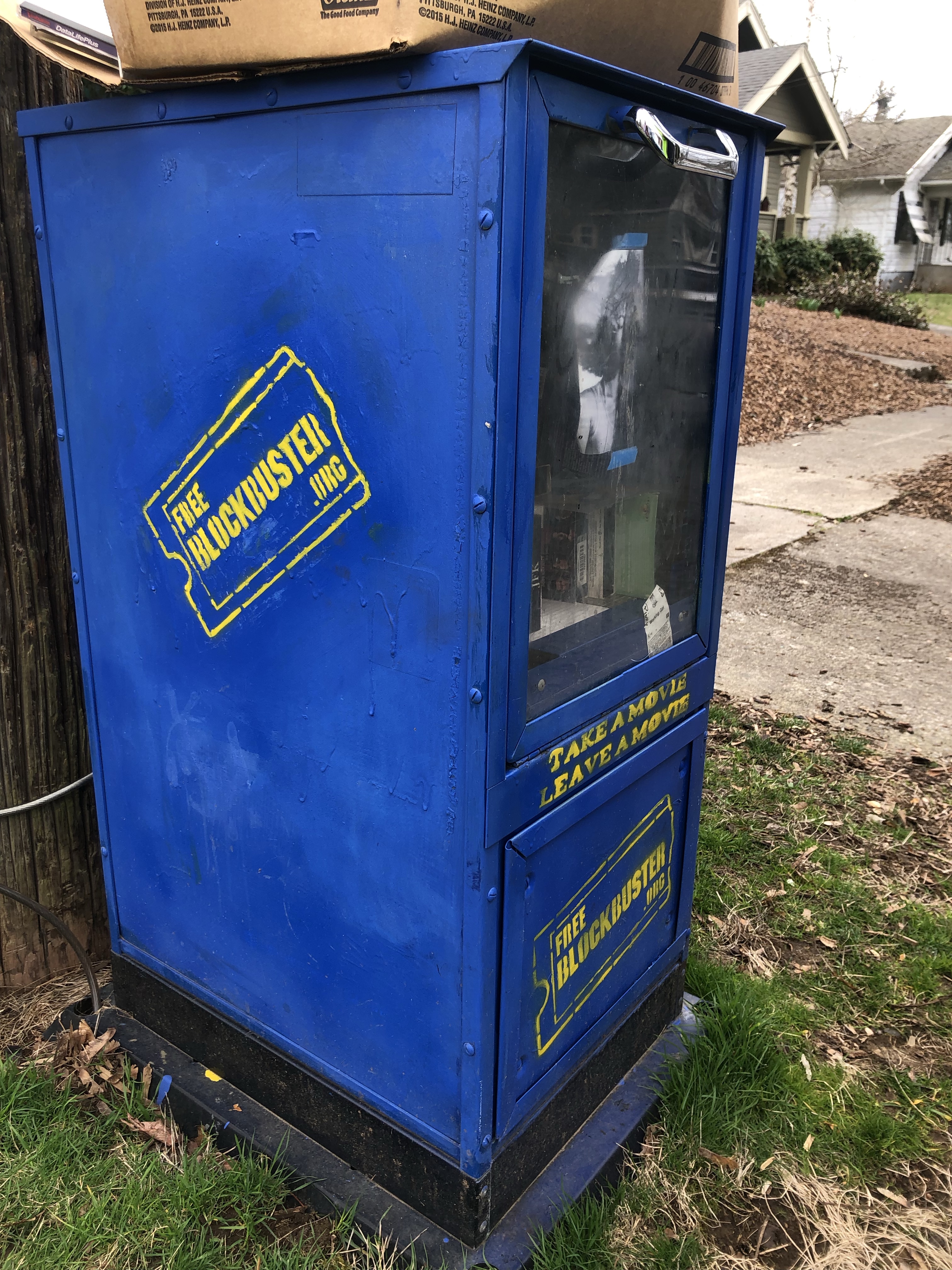
This concept in video rental isn’t a great business model but it works as a homage to the last remaining Blockbuster Video Store that happens to be in Oregon. This is the next best thing to a Blockbuster establishment. It can be found on SE 75th Avenue. Check out entertainment options in VHS, or consider borrowing a CD or blank cassette.

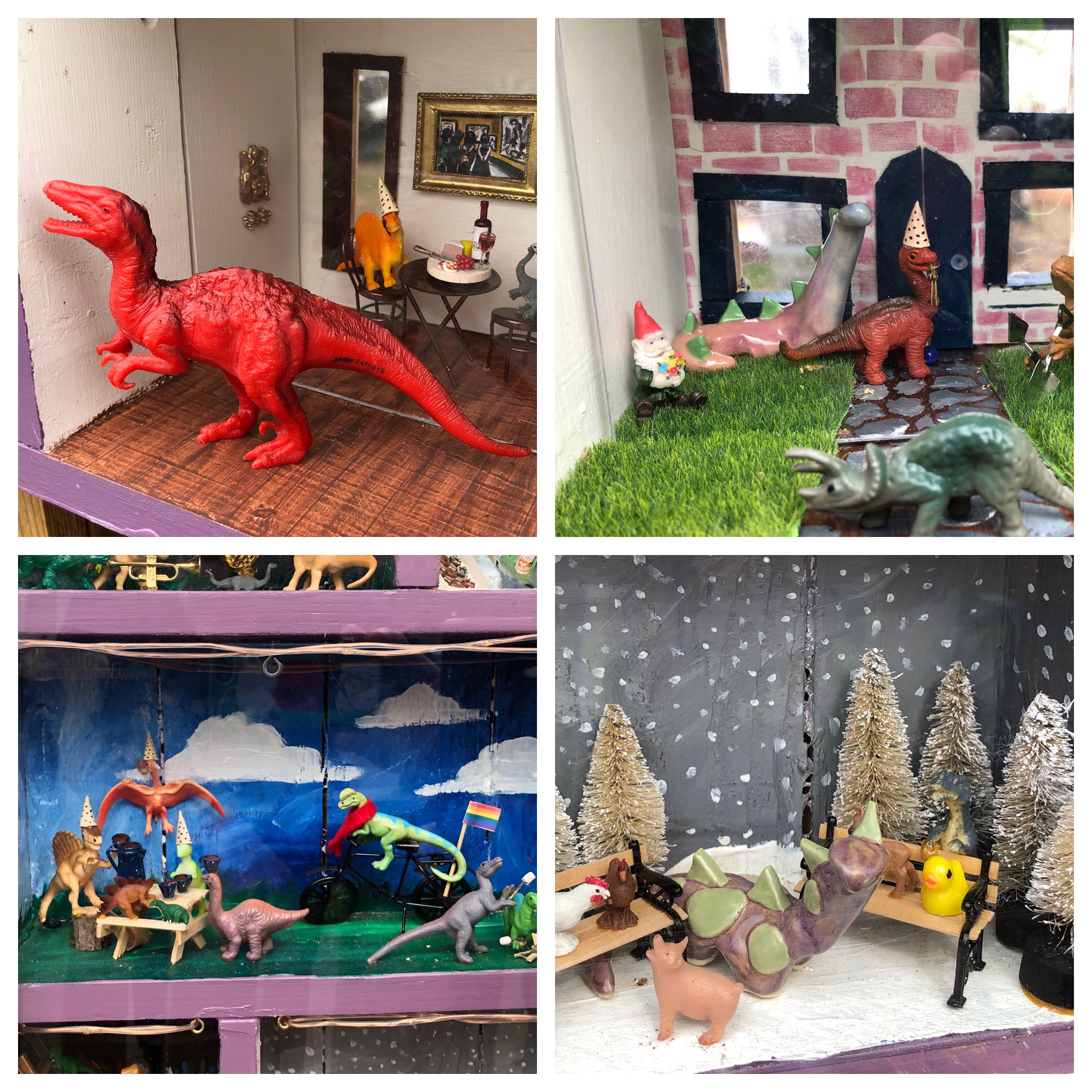
Dinorama & Friends

The dinorama exhibits are personal favorites due to the enjoyment I got from making my own dioramas in elementary school. It’s a great use of miniatures for scenes that take time to decipher. The creativity alone makes this one shine. You’ll find it on SE Morrison St in the Montavilla neighborhood.
* * * * *

In my intro, I couldn’t quite figure out to elaborate on how our whole tour was organized by Jimmy Radosta. I was more than willing to be a part of any plan that had us riding around and looking at stuff and the route planning was impeccable. While we weren’t lacking in ambition, we realized we needed to split the trip into two parts rescheduling the rest of the tour for the next month. I hope to reveal that second tour to the world someday. We ended up watching one of the Star Trek episodes Jimmy grabbed from the Blockbuster bin. Keep those VCRs alive, you never know when you may need them.

***Ah, and Mrs. Yuchmow, it was just feeling to use the word And to begin a sentence because, well, it felt right. I was being playful, maybe a bit sarcastic or cheeky as they say across the pond.

The Route:
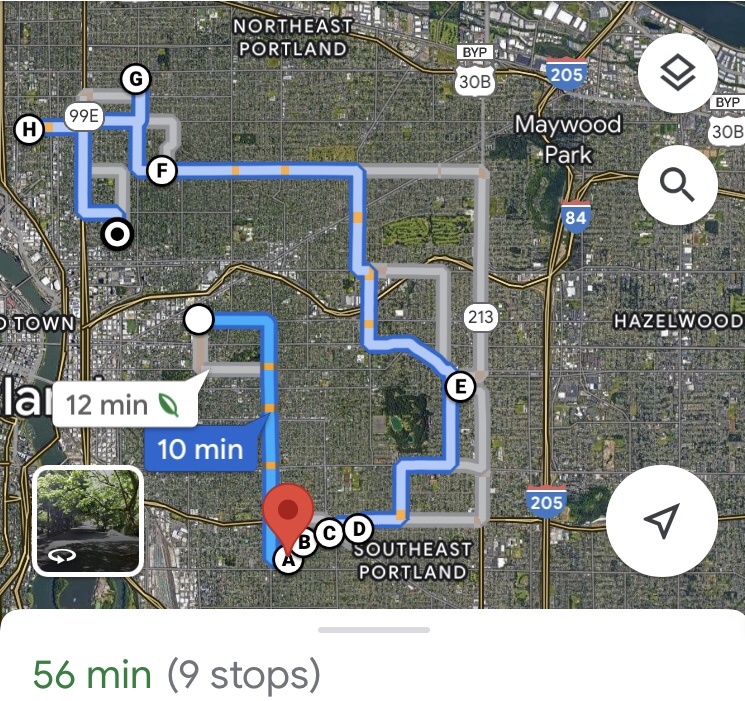
Find the site:

Like Toys On Christmas Morning: A Visit to Kidd’s Toy Museum

“Nobody knows about us,” was one of the last things we heard as we were leaving the Kidd Toy Museum at 1301 SE Grand Avenue. I had gone there with Will Simmons from Pittsburgh, Pennsylvania who’s famous for his Pittsburgh Orbit blog. The comment wasn’t made to elicit sympathy, it was a statement that had to do with the museum’s no advertising policy.

It may have been the ninth time I’d heard about it, more on that later, but the tip that got me through the door came from writer Chuck Palahniuk. I had heard rumblings about the place and read about it in Palahniuk’s book “Fugitives and Refugees,” but my preconceived notions of a what a toy museum could be may have kept me away. I imagined being herded into an annoying gift shop filled with precious toys for sale, but no, Kidd’s Toy Museum is nothing like that–a characteristic that cements its low-key charm. Palahniuk recommended the place in a list of Portland must-sees in one of the weekly newspapers making it an opportune place to visit with an out-of-town guest.

photo by Will Simmons

In all my over stimulation resulting from looking through rooms of old toys, I overlooked getting the name of the woman (Julie Kidd) Will and I spoke with as we were headed out the door. She was informative and gracious looking up at us from where she sat in a cluttered office area. I missed the origins of Kidd’s toy collecting mania as it was described because I was slow to turn on my phone’s voice recorder. I recall that Frank Kidd’s collecting bug took off with the buying of a toy on a business trip.

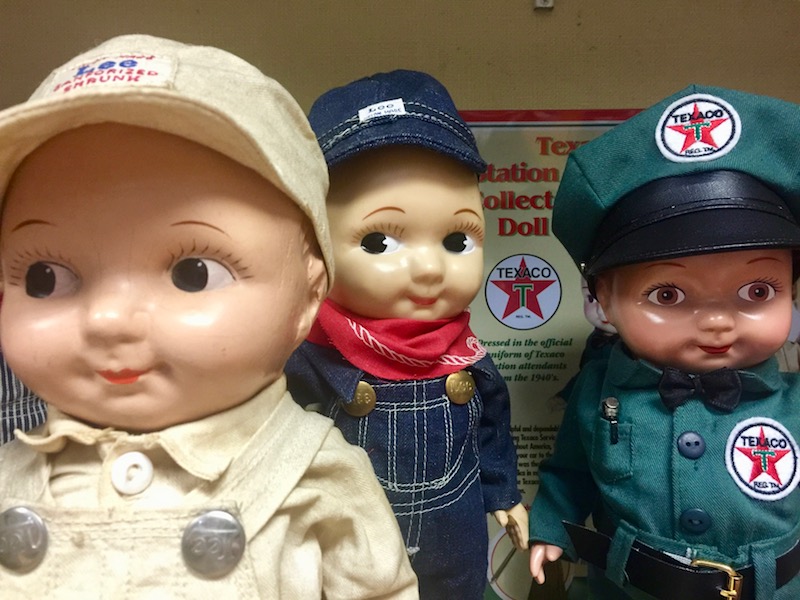
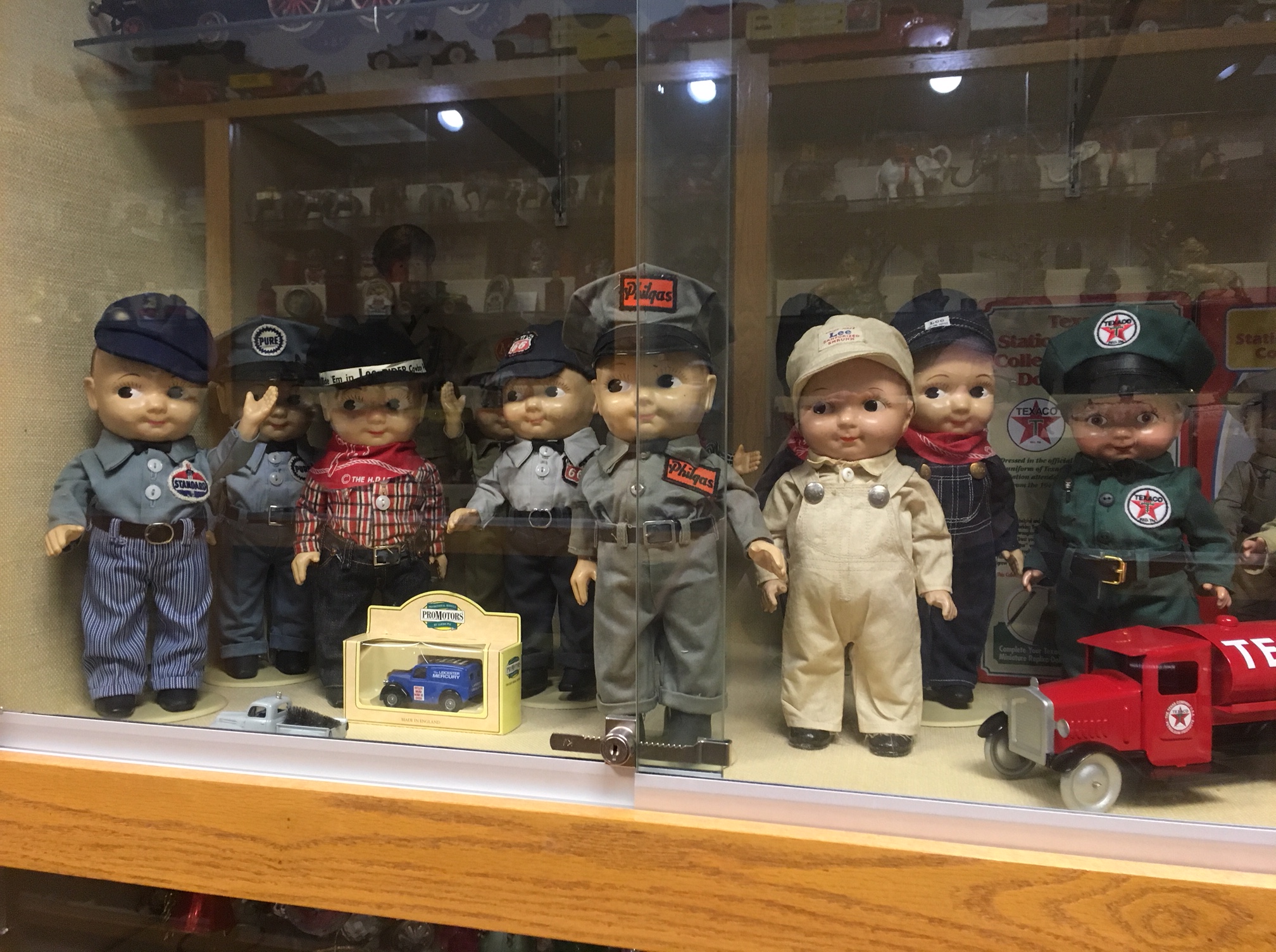
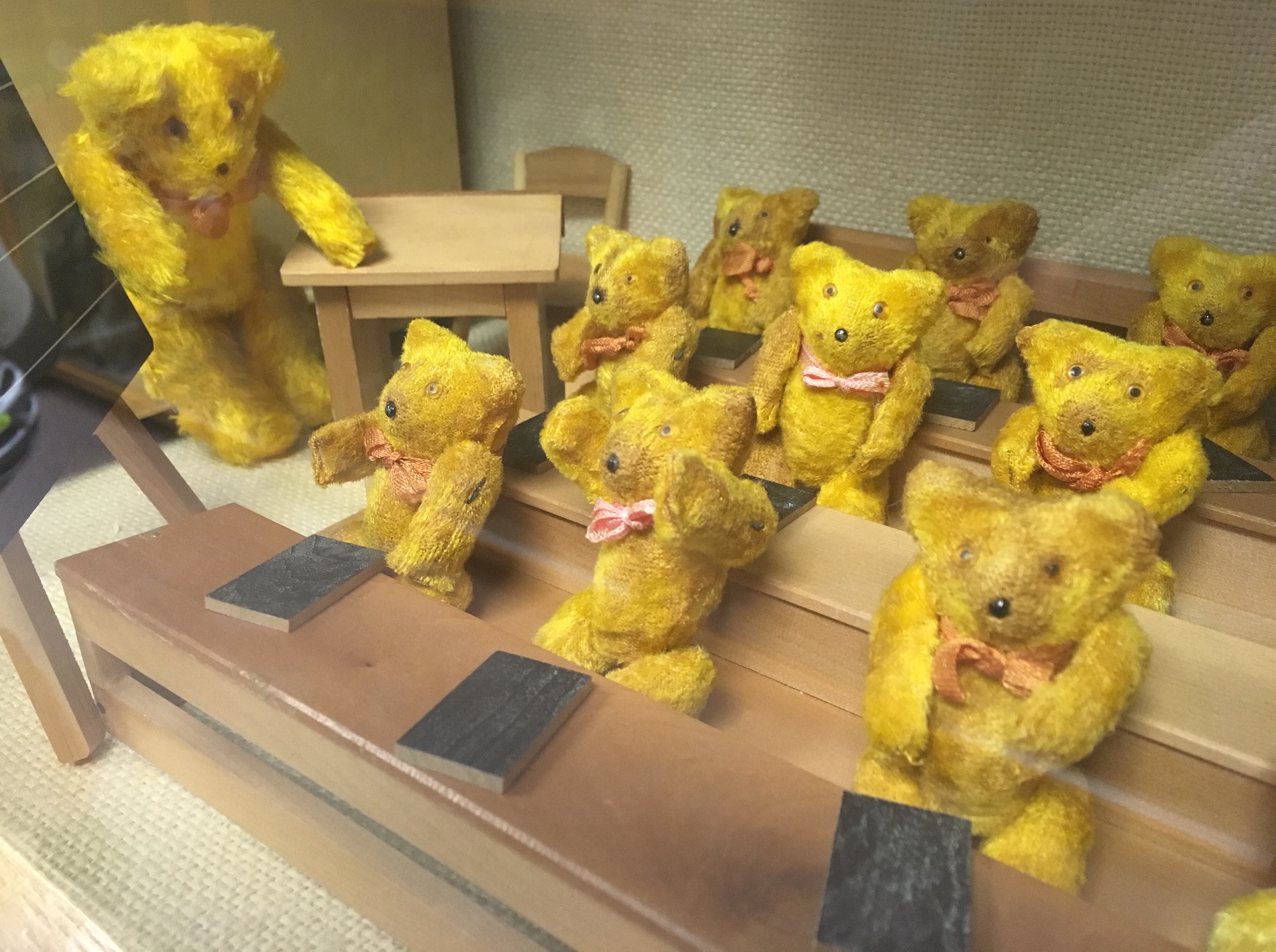
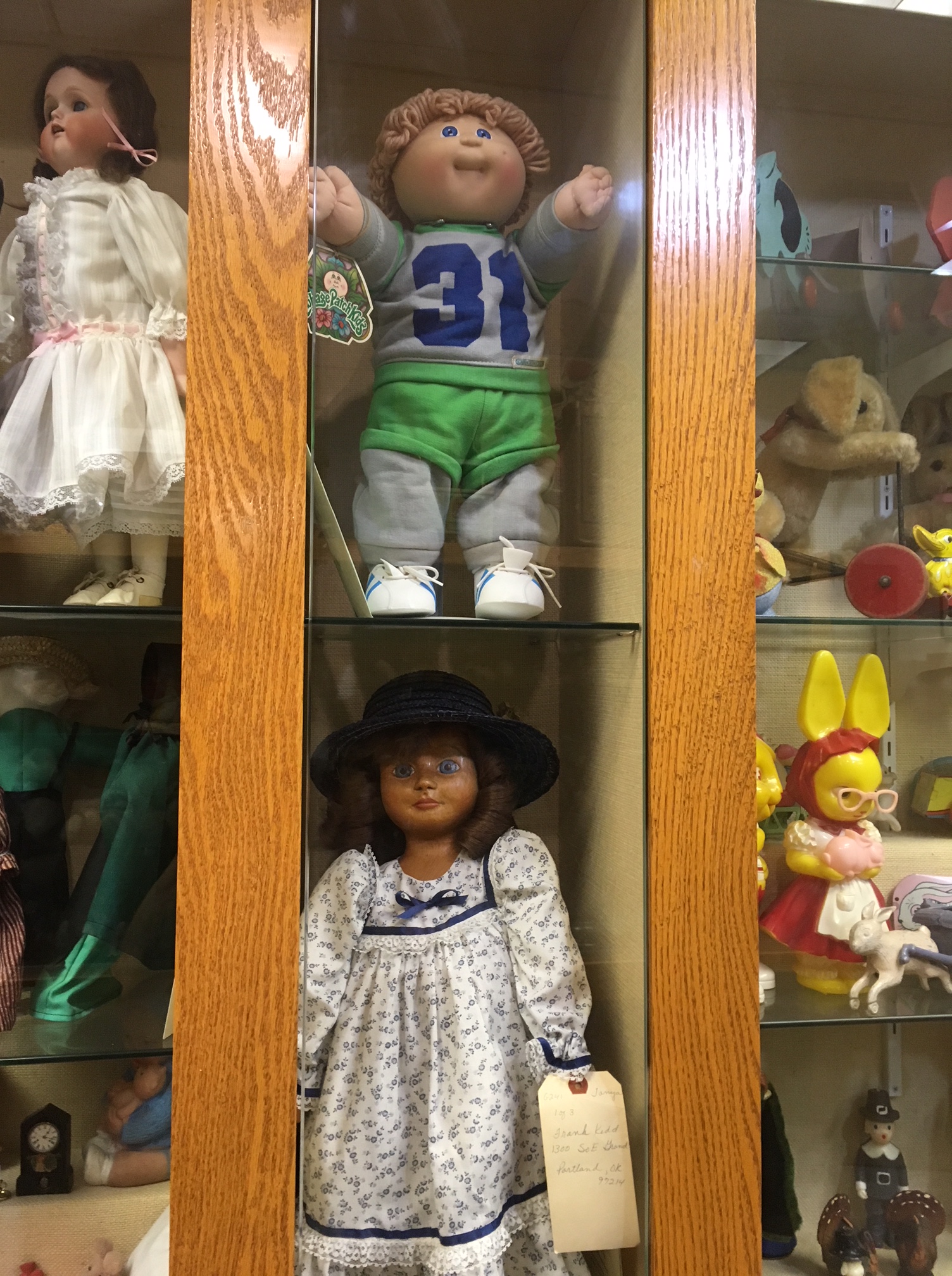
Regardless of the genesis, the museum holds quite the collection of banks, dolls, cars, trains and other odd genres. The collection is grouped by category, housed in glass enclosed cases and lit by fluorescent lighting. We were told that the museum exists in part because an inheritance tax that might have required parts of the collection be sold off. Kidd created a nonprofit to keep the collection together, a nonprofit status that requires the toys be made available to the public.

Kidd owned the museum’s building where there had been a fire from a former tenant’s restaurant. At that point the decision was made to remodel the space for the toy displays. The museum opened fifteen years ago. As crammed full objects as the museum is, it houses only one-third of the collection. Kidd shares the toys he likes the most. Part of the museum’s inclusion of multiple versions of the same of item made sense when we were told that Kidd bought the best examples of what he could. This had Will chiming in, “sometimes three or four.” Many of the banks, are duplicated. Sometimes it’s different paint jobs or different castings that are hard to tell a part. The collection was described as being “generally pre-World War 2.”

photo by Will Simmons

One feature of the museum is how unlike a museum it is. It’s an opportunity to see a well-curated antique toy collection. The displays offer little information like brand names or dates. This minimalism is due, we were told, to the notion that signs would take up valuable display space. Seeing the objects as they are offers visitors a to experience the toys and form their own interpretations.

Word about the museum doesn’t get out due to that lack of advertising. It was explained that, “people locally don’t tend to know we’re here. People from out-of-town look for things to do.” Word of mouth comes from a woman who runs a North Portland candy store who recommends that people visit the museum. People are sure to mention when the “Candy Lady” sent them.

As we were running out of conversation we were given a quick lesson in advertising. Our museum contact told us what she’d learned in an advertising class. She explained that you have to see something three times before you actually see it and three more times before you act on it. The math means you have to see something nine times before you do anything about it. The number nine stuck in my mind. It seemed as good an explanation as any as to why I had lived in Portland for nine years before l made it to Kidd’s Toy Museum. Don’t let it take you that long.

*********

I received a comment that made a good point. It should be noted that the museum is open weekdays from 9am to 5pm. It has no weekend hours.

Note: There are items on display at the museum that some might find controversial. At a time when we’re offering wishes of good will to all mankind I made a decision not to delve into this aspect of the collection. I may visit it at a later time.

Keep your rabbit hole dive going with this excellent article from the Smithsonian Magazine. Yoi!! You might have to cut and paste.

https://www.smithsonianmag.com/travel/weird-important-artifacts-portlands-antique-toy-museum-180955887/

Free Is The Way I Like It

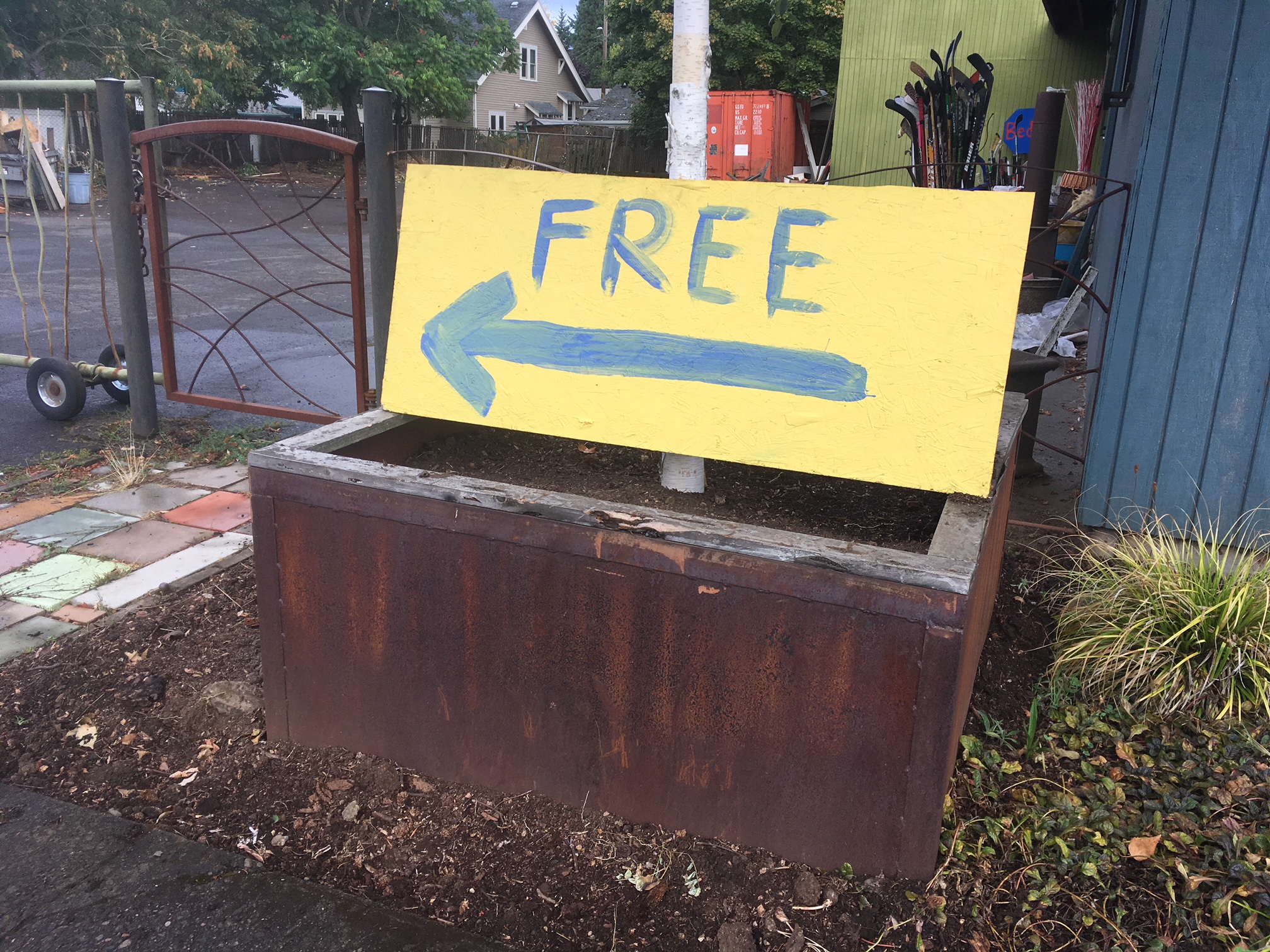
A classic free box, yours for the taking.

My friend Butch Lazorchak had a saying, or maybe it was just something he said once that I  associated with him, an expression legendary in my mind. I forgot the circumstances but one day he blurted out, “free is the way I like it.” It’s not catch-phrase worthy, but appropriate in the right situation. The saying pops into my head when I see a free box or a sign that brings my attention to a free item on a curb.

The deal was sweetened with a jump rope and a dog frisbee.

I’m not writing about the Freegan lifestyle. That’s a different post. I know there are websites and networks for those who champion that lifestyle. With effort, bargains are sure to be found and technological advances make their pursuit easier. I prefer random encounters with free stuff; things I don’t even have to bring home.

No indication of what’s free, but the sign’s magnificent.

Like most people, I appreciate anything free. I’ve never been able to find free shoes that fit but discarded shoes gross me out anyway. I have unrealistic expectations that all concerts should be free which is why I never go anywhere. I have no idea what a free food hook up is. That no free lunch slogan is the story of my life. The occasional art opening really means free cheese. Considering how disappointing “free” antenna TV is makes paying for cable worth it. Regardless I always hope worthwhile free stuff will come my way.

Oxymoronic, yet happening.

Summers in Portland are good times to leave stuff out for gleaners. People feel confident that even if no one wants their junk there isn’t the risk that it will be ruined by rain. In a survey with no scientific merit, Saturdays were deemed the most popular day for this donation method. It’s the first day of weekend cleaning. I always thought that if I needed a chest of drawers, which I actually would like to have for bike stuff, I could drive around on a Saturday and find one.

Spread out your wares so customers can see your free offerings.

This is a great concept, this placing of goods on the curb in hopes that someone will find value, the value that is no longer found in the item by the discarder, and carry it off eliminating the trip to the dump or the item heading to the landfill. I prefer discard piles that have a sign, otherwise it feels like a gray area that has me questioning whether people are getting rid of items or utilizing lawn storage space. The free sign is optional because it’s a given that stuff on the curb invites people to help themselves. It made me feel better when I asked someone if I could take the tape deck from a signless pile on a curb. I also asked if the deck worked. The answer was sure and “your guess is as good as mine.” Cordiality is unnecessary when dealing with free junk.

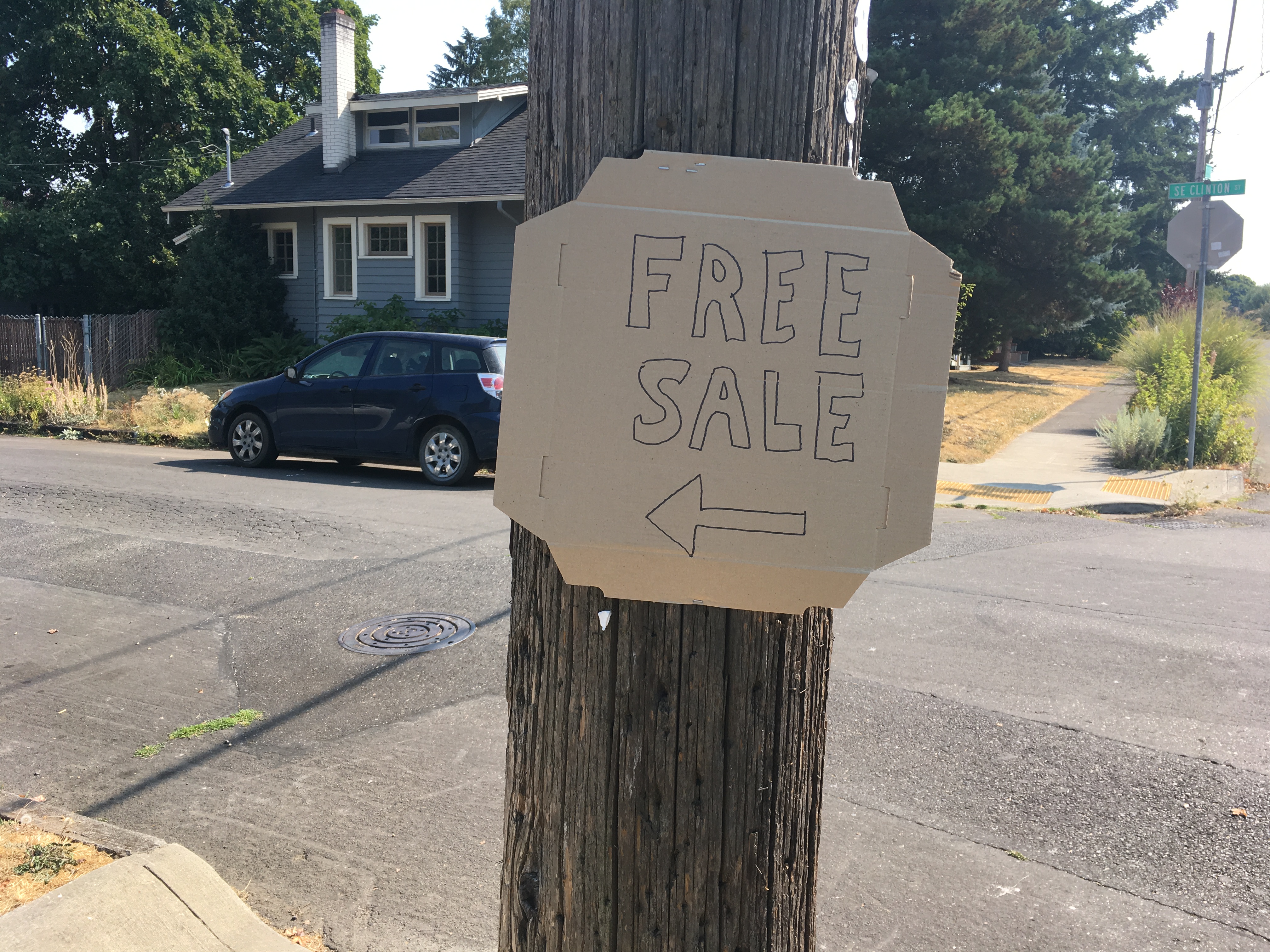
No free poles, only poles that advertise free couches.

I would gather free stuff from curbs on a regular basis but I can’t indulge my hoarder tendencies when I have a basement full of junk. My restraint is incredible. I only window shop curbside free stores taking fleeting glances into pandora’s box-like, free boxes. My quest for an old couch, delusional as I may have been that the right one would appear someday, ended after hearing a bedbug horror story that occurred from someone dragging free furniture into their home. Contamination cures couch collection compulsion the headline could have read.

A free couch, expertly labeled.

Free Boxes have inspired the creation of art. Jon Meyer named his web series The Free Box after encountering many of them in SE Portland. The show centered around broke characters and free boxes that were worked into some of the episodes.

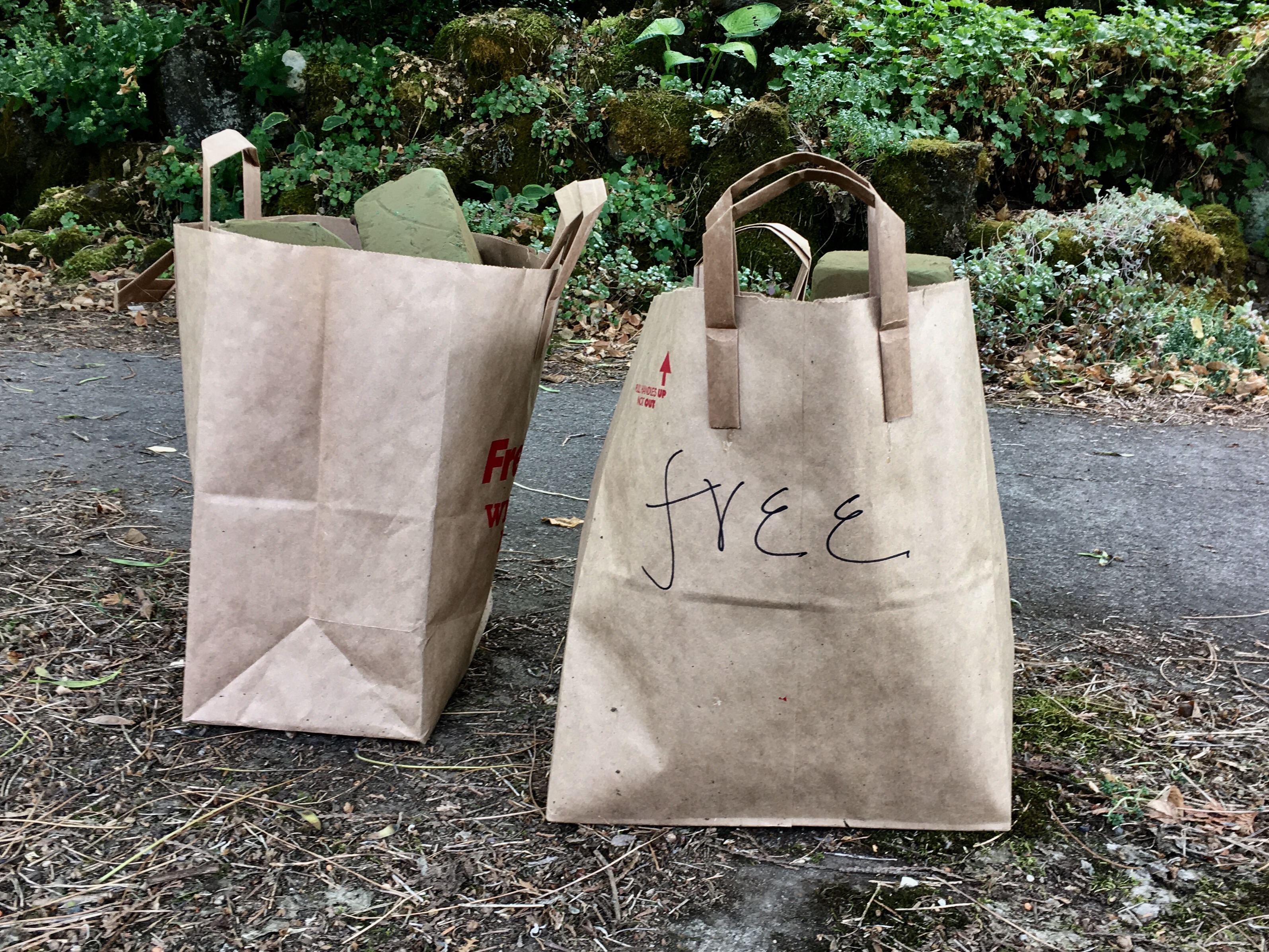
Conveinent and recyclable packaging is essential.

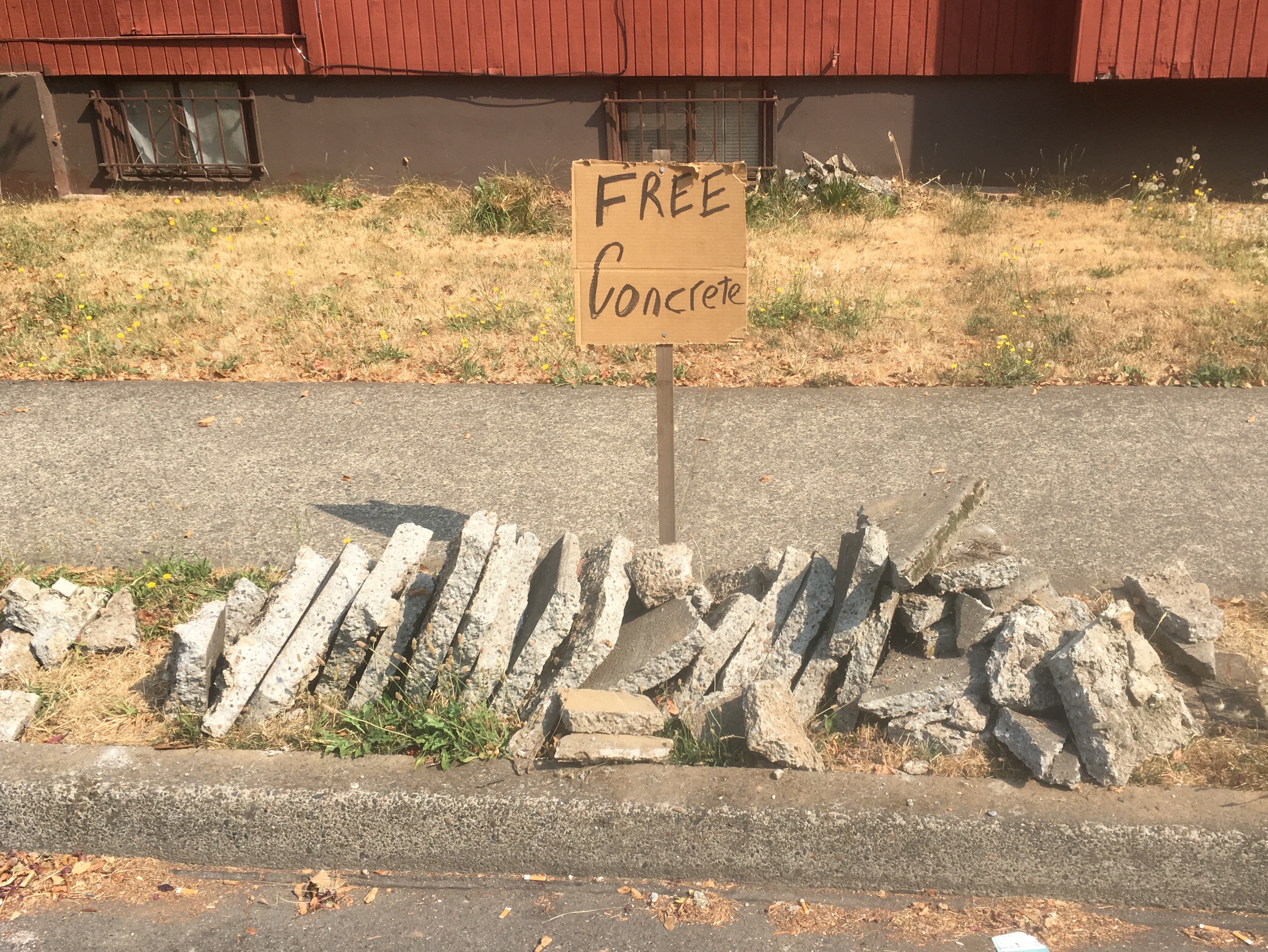
The free stuff that’s available can be anything. Some of it falls into the “You’re Really Trying to Give That Away?” category. People want to find someone who can give new life to what they need to get rid of, whether it’s a pile of dirt with a sign made from painter’s tape or a collection of broken concrete. Free box books are usually better suited for the Goodwill self-help section yet every once in a while a must-read can be unearthed. A bag of free floral foam was one of the more unusual, yet useful things I’ve seen lately. If you think you really need something and don’t want to pay never give up your quest to find it. Free stuff will always materialize but more likely  when you need it the least.

Free Dirt and home made font.

Free is the way I like my chunks of concrete!


Just as this post went to press I got wind to a nice article on the OPB website with a free stuff angle:

http://www.opb.org/artsandlife/article/portland-oregon-free-stuff-reuse-recycle-why/

Also Jon Meyer, who was mentioned in this post, sent me a link to a blog post he wrote about the free stuff phenomena that I wanted to pass on:

http://jonjamesmeyer.blogspot.com/2013/05/the-power-of-free.html?m=1


The Emerick Collection


emmerick-collection-nov-2

If you end up at the Sunnybrook Medical Center it may be due to an injury requiring the services of a trauma surgeon. Or you may have something stuck in your ear, nose, throat or somewhere else necessitating a visit to the ear, nose, throat, or somewhere else department.

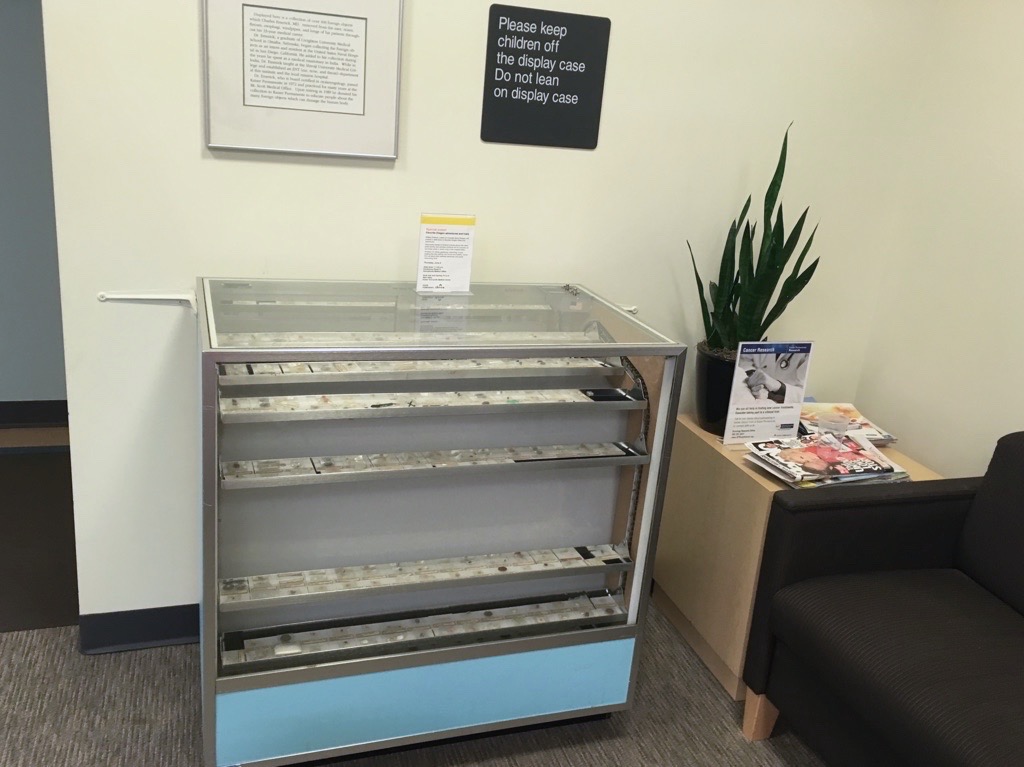
Thanks to a display tucked away in the lobby of the ENT department, I learned all manner of objects can be and are lodged in the human body.

emmerick-collection-nov-2-2

The framed story of Dr. Charles Emerick* greets those, suffering and not, who enter.  He collected these items during his service at a missionary clinic in India and a Naval hospital in San Diego. His career summited Mt. Scott at Kaiser Permanente where he cached his loot of curiosities upon retirement. The display educates patients, staff, and visitors of the dangers of things and bodily cavities and the  coexistence of the two. The origins of this collection, while not discussed in the brief write up, are what intrigue me. That spark, that moment of inspiration when Dr. Emerick committed to starting his collection had me wanting to dig (pun may or may not be intended, I’m just not sure) into this story and uncover more than what the lobby offers.

emmerick-collection-nov-1-2

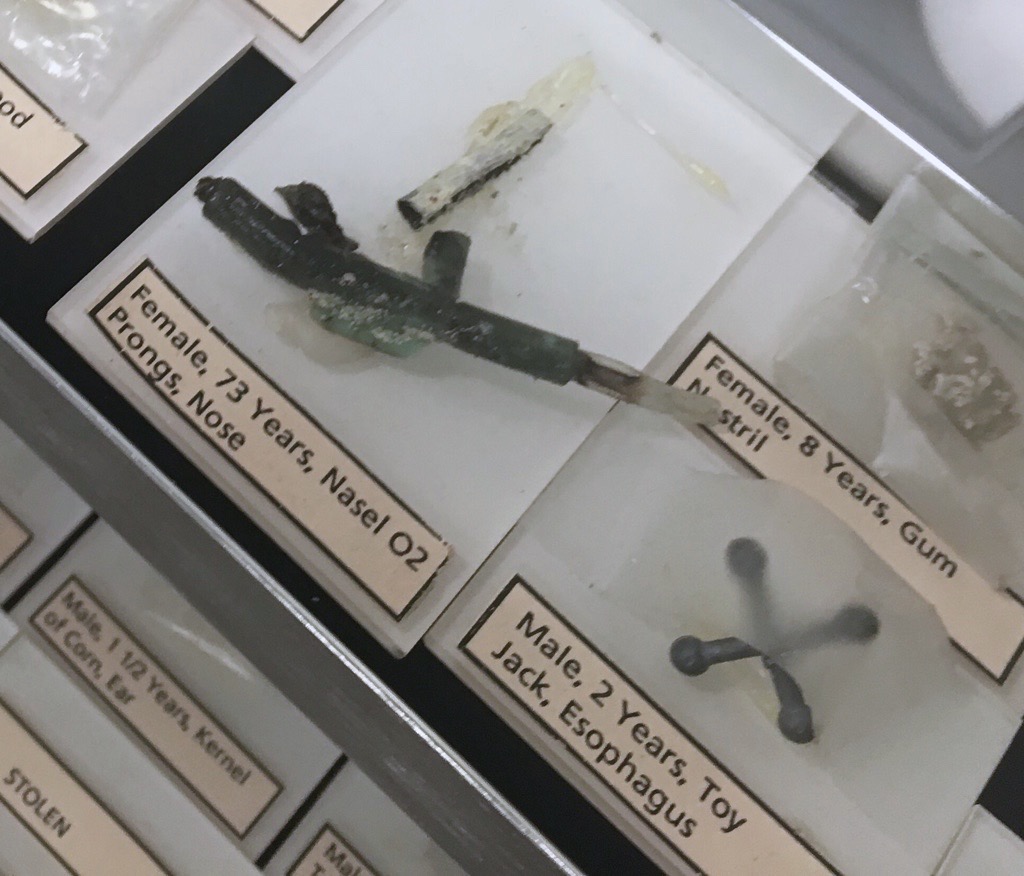
Thanks to modern technology, I was able to access an article about Dr. Emerick. The old school alternative would have had me in library basement futzing with microfiche and an ancient, bulky machine. I found one secondary source available with ease, an Associated Press article that ran in a Fredericksburg, Va. newspaper in 1997. Dr. Emerick had been retired for seven years. A photo showed him looking over his collection. I read looking for the source of his inspiration to collect what are referred to in the story as “items.” And there it was!** Emerick explained he, “was inspired to keep the items because he heard Dr. Chevalier Jackson, a pioneer in endoscopy, had such a collection.” Note that endoscopy is how an item, once lost in the esophagus, trachea or lung, is located.  A hollow lighted tube illuminates the included object; it then takes an additional piece of gear for removal should the object prove an obstruction or irritant or otherwise inconvenient or unwanted addition to the patient.

emmerick-collection-nov-5-2

It’s noteworthy that the AP writer made an attempt to locate Dr. Jackson’s collection which was last seen at Temple University Hospital. A spokesman uttered the sad words, “nothing remains of the collection.” This gives Dr. Emerick’s achievement heightened stature and highlights its remarkable staying power simply persisting in its low key existence, not as some central attraction of a national medical museum but in the quiet confines of Kaiser’s ENT waiting room.

emmerick-collection-nov-4-2

Looking over the items housed in the display case with revolving shelves, the kind of display case you find in antique stores, was as fascinating as it was gross. The first consideration seems to be with the item itself. I thought about the size and shape of the bagged and tagged objects before moving on to contemplate where each was found. It never failed to amaze me.

emmerick-collection-nov-6-2

It’s rare to see evidence doctors put this much effort into their jobs. Trash cans have been filled so thoughtlessly over the years. Body junk salvaged from many an Ear, Nose and Throat languishes in landfills, yet the experiments and accidents of Dr. Emerick’s patients live on in a display case in Portland carefully preserved and labeled.  It is detritus for all time, but also significant and instructive. Whether a pilgrimage must be made to this strange menagerie is up to you unless you’re accident prone or careless with either money or crayons.  If that’s the case, a few extra minutes checking out this collection on the third floor could be worth thousands in future medical expenses.

emmerick-collection-nov-3-2

*After a bit of confusion, I figured out that Emerick was the last name of the doctor and not a medical term referring to stuff lodged in the human body.

**Mrs. Yuchmow having to justify using the word “and” at the beginning of a sentence always makes me try to find a way to not do it, but I needed to add drama to my story and discovering a tidbit of information concerning something I had been wondering about for a long time but hadn’t gotten around to checking out inspired that sentence: And there it was. Yes you told your students in Princeton, NJ, back in the day, that under most circumstances they shouldn’t start a sentence with the word “and.” In this case you should just be glad I didn’t use an exclamation point.